

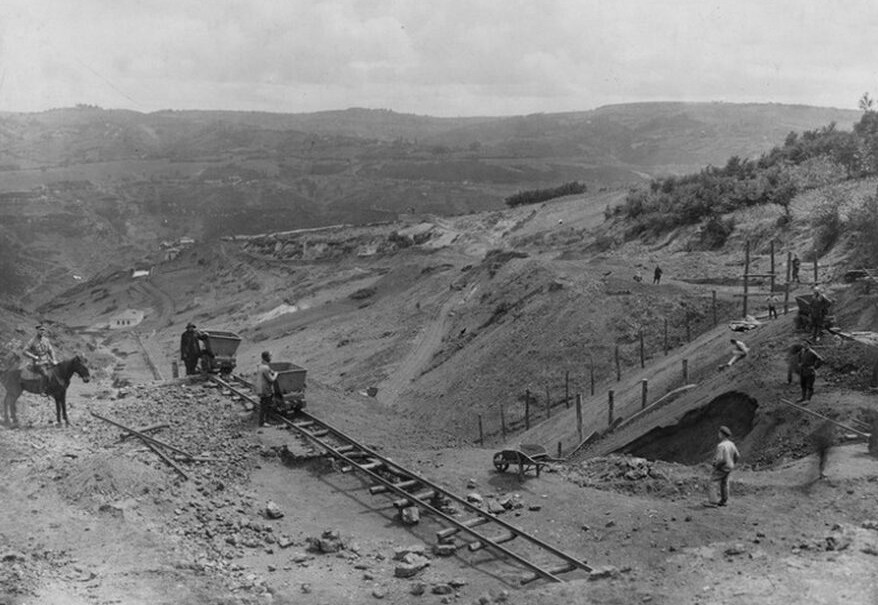
History of Chiatura mining and enriching complex
The origin and further growth of Chiatura as a city was caused by the presence of ore in the Kvirila river valley. Ore mining began in 1879 by the initiative of Akaki Tsereteli, when representatives of the Krupp plant, as well as the representatives of Gute Hoffnung iron mines in Westphalia and the St. Petersburg trading house "Wachter and Company" came to Chiatura, and in the same year, 54 thousand feet of manganese were extracted. Local entrepreneurs were also involved in manganese processing.
Manganese was mined mainly in the Shorapani Mazra on both banks of the Kvirila River. The centre was Chiatura village. As a whole, the manganese mining basin, apart from Chiatura, consisted of eight more villages: Rgani, Tabagrebi, Mgvimevi, Darkveti, Perevisa, Shukruti and Itkhvisi.
The 54 tons of manganese, which was exported from Chiatura to the world market for the first time, was distinguished by its high quality and therefore attracted great interest in industrialized countries.
By 1895, the railway connected Chiatura with Shorapani station. By that time, Chiatura mines already employed thousands of people and provided up to 50% of the world's manganese demand.
In 1925-1928, the right to extract manganese was granted to the JSC "Georgian Manganese" (it is not related to the current company), which was headed by the American industrialist William Averell Harriman (Averell Harriman).
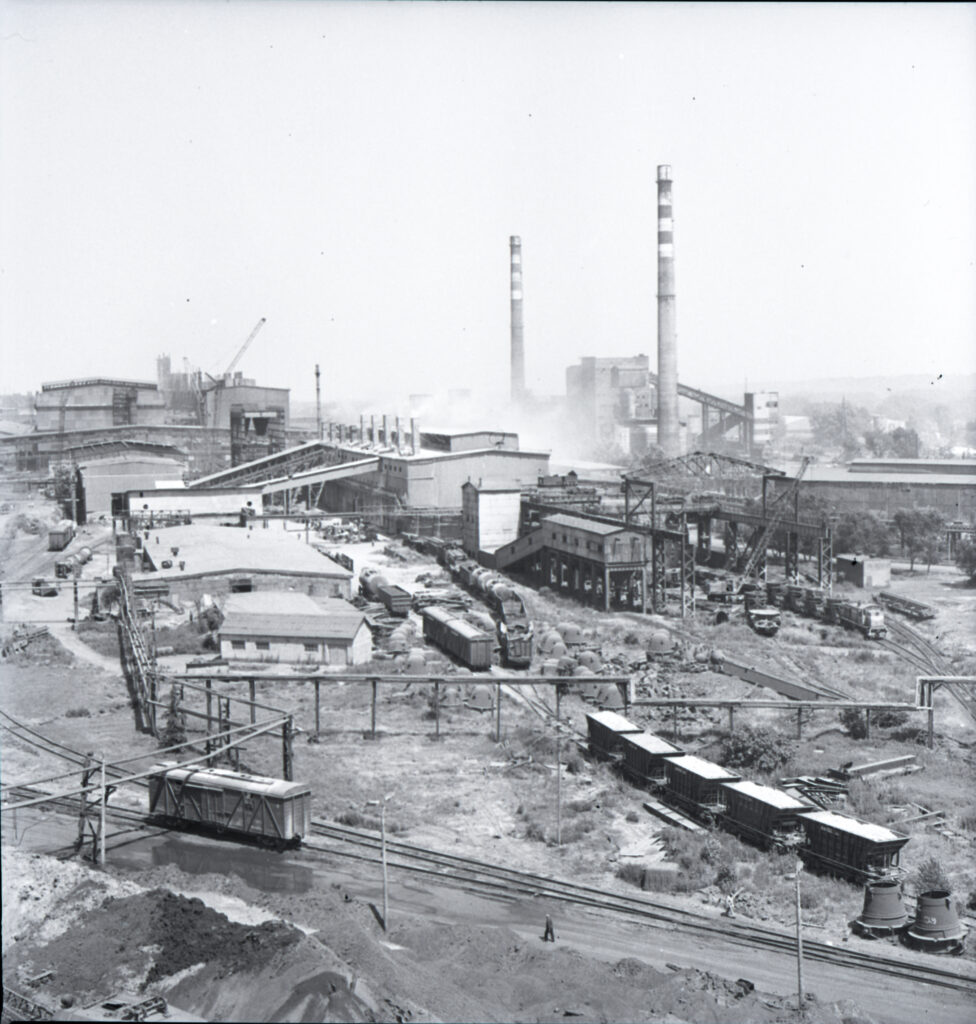
History of Zestafoni Ferroalloy Plant
The construction of the ferroalloy plant in Zestafoni was determined by two main factors - the neighbourhood with the Chiatura manganese ore and the proximity to highways and ports. The construction of the factory began in 1931, and the first casting day is October 30, 1933, which is officially considered as the first day of the plant operation.
By the end of 1937, the plant was producing 11 varieties of ferroalloys, and after that the ferromanganese plant was transformed into a ferroalloy plant. Over the years, the Zestafoni plant has expanded its activities and production capabilities in order to meet the international requirements for the production of high-quality ferroalloys. The enterprise has 12 electric arc furnaces with a high-level air filtering device, a sintering plant and a renovated workshop for manganese briquettes.
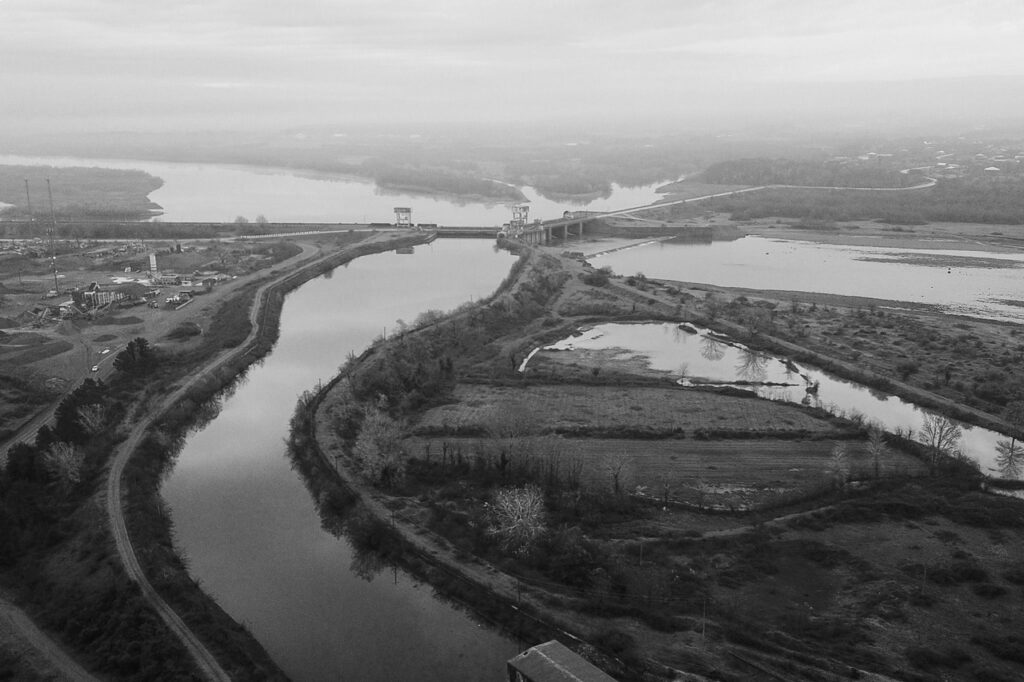
History of Vartsikhe hydro power plant.
Today it is very important to utilize renewable energy and use it effectively, which is carried out by Georgian Manganese together with Vartsikhe Hydro Power Plant. At Vartsikhe Hydro Power Plant, which is a fully renewable hydroelectric plant, we would like to develop a sustainable, reliable, economic and efficient plant that provides sustainable output, security of supply and quality electricity.
The company extracts ore and produces outputs with the use of the energy generated by Vartsikhe Hydro Power Plant. "Vartsikhe 2005" LLC is one of the most powerful hydro power plant in Georgia, located in the Imereti region, near Chiatura and Zestafoni, in a favourable location where the rivers Rion, Kvrilila, Khanistskali, Tsblisstskali and Tskalsitela flow. The first stage of the Vartsikhe Hydro Power Plant cascade was launched in 1975, and was fully operational in 1988. The cascade of Vartsikhe Hydro Power Plant will represent a cascade of four identical hydroelectric power plants with a total installed capacity of 184 MW (projected annual output – 1.0 billion kWh). The capacity of each plant is 46 MW. In recent years, a number of works have been carried out at Vartsikhe Hydro Power Plant, aiming to increase the capacity of the cascade and upgrading equipment, such as reconstructions of hydro generators, repairs of electric power equipment and hydro facilities, as well as reconstruction of transmission lines. As a result of the measures taken, both the reliability of the devices and the electricity generation increase.

